

Pearls Fall 2026
Dane County Immunization Coalition Updates
Volunteers Needed!
The Dane County Immunization Coalition is always looking for volunteers to help with efforts to increase vaccination rates in our area. Opportunities include volunteering at local immunization clinics and assisting in outreach. If you are interested, please sign up here!
Upcoming Quarterly Educational Meeting
Mark your calendars! Our next quarterly educational meeting will be held virtually on Tuesday, November 17, 2026 from 12pm to 1:30pm. Dr. Kacie Rytlewski will be talking about the measles outbreak in Wisconsin. She will be reviewing disease epidemiology, measles recognition and detection, infection control measures, and immunization. Watch your email in the coming weeks for the agenda which will have the Zoom link.
Immunization Updates
CDC publishes “Interim Clinical Considerations for Use of COVID-19 Vaccines in the United States”
On September 23, CDC posted updated Interim Clinical Considerations for Use of COVID-19 Vaccines in the United States. This guidance carries over previous recommendations in place following the court-ordered stay of certain ACIP decisions in early 2026. In the guidance, the CDC recommends 2026–27 COVID-19 vaccination for all adults age 18 years and older. Two 2026–27 COVID-19 vaccine doses, spaced 6 months apart (minimum interval of 2 months, or 3 months when using mNexspike mRNA vaccine by Moderna), are recommended for adults age 65 years and older. For children, CDC recommends 2026–27 COVID-19 vaccination for all children age 6 months–17 years who are moderately to severely immunocompromised. For all other children, CDC recommends COVID-19 vaccination through shared clinical decision-making.
Major medical societies release 2026–27 season immunization recommendations for influenza, COVID-19, and RSV
On September 2, four leading medical organizations released immunization recommendations for the 2026–27 respiratory virus season, covering influenza, COVID-19, and RSV vaccines. The recommendations aligned with each other and are based on three evidence reviews published the same day in JAMA.
The recommendations were issued by the following groups: American Academy of Pediatrics (AAP) for children through age 18 years; American Academy of Family Physicians (AAFP) for immunocompetent adults and healthcare professionals; American College of Obstetricians and Gynecologists (ACOG) for pregnant patients; and, Infectious Diseases Society of America (IDSA) for immunocompromised people. In addition to the society-specific pages, the American Medical Association (AMA) launched a resource hub page that links to recommendations by age or condition, supporting resources, and links to each evidence review.
- AAP: Respiratory Virus Immunization Guidance for 2026–27
- AAFP: Fall Immunization Recommendations to Protect Patients and Communities
- ACOG: 2026–27 Respiratory Virus Season Immunization Recommendations for Pregnant and Postpartum Individuals
- IDSA: IDSA Recommends Respiratory Vaccines for People with Weakened Immune Systems
Wisconsin issues guidance for respiratory illness vaccines
Wisconsin Department of Health Services released guidance for Wisconsin healthcare providers to administer influenza, COVID, and RSV vaccines.
- For older adults:
- A single dose of RSV vaccine is recommended for all adults aged ≥75 years.
- A single dose of RSV vaccine is recommended for adults aged 50–74 years who are at increased risk for severe RSV disease, which includes:
- People with certain chronic medical conditions or with moderate or severe immune compromise,
- People who are living in nursing homes.
- Adults aged 50 years or older may receive any RSV vaccine licensed for adults aged 50 years or older
- If a patient received a dose of RSV vaccine during the previous respiratory virus season an additional dose is not indicated.
- During pregnancy:
- A single dose of Abrysvo should be administered to pregnant women during September 1–March 1 during weeks 32–36 of pregnancy (32 weeks 0 days through 36 weeks 6 days) to target vaccine to those whose infants will be in their first months of life, when protection from maternal vaccination would be at its highest, during the RSV season.
- No additional doses of Abrysvo should be administered during subsequent pregnancies.
- Subsequent infants are recommended to receive monoclonal antibody for protection against RSV.
- Arexvy and mResvia are not approved for use during pregnancy.
- Universal recommendation for infants: The AAP routinely recommends seasonal COVID-19 vaccination for all infants aged 6 through 23 months due to high, sustained hospitalization rates in this age group.
- Pediatric risk-group recommendations: For children and adolescents aged 2 through 18 years, the AAP recommends routine seasonal vaccination for specified risk groups, including those at high risk of severe disease, residents of congregate settings, never-vaccinated individuals, and those with high-risk household contacts. Additionally, a single seasonal dose should be offered to all other healthy children and adolescents 2–18 years whose parent or guardian desires protection from COVID-19, administered at least 8 weeks after their last vaccine dose.
- Universal recommendation for adults: The AAFP recommends that all adults aged ≥19 years receive an updated seasonal COVID-19 vaccine. Clinicians may vaccinate healthy adults off-label under standard medical practice, noting that broad high-risk definitions (including obesity, former or current smoking, and physical inactivity) encompass the large majority of the adult population.
- Senior two-dose schedule: To counteract rapid immunity waning in highly vulnerable cohorts, the AAFP recommend that all adults aged ≥65 years receive two doses of the updated vaccine each season, spaced 6 months apart.
- Immunocompromised guidelines: The IDSA recommends age-appropriate seasonal vaccination for all adult and pediatric patients with compromised immunity starting at 6 months of age. Immunocompromised patients may receive a second dose 2 to 6 months after the first and additional doses within 12 months based on clinical judgment. Solid organ transplant candidates should be vaccinated ≥2 weeks pre-transplant, and recipients should be vaccinated ≥3 months post-transplant.
- Maternal immunization recommendations. The ACOG recommends routine COVID-19 vaccination for all pregnant, postpartum, and lactating individuals using any age-appropriate 2026–2027 formulation. Because infants under 6 months of age experience the highest rates of pediatric COVID-19 hospitalizations and are not eligible for vaccination, maternal immunization is a critical strategy to transfer passive immunity to the newborn. Vaccination during pregnancy reduces COVID-19-related hospital contacts in infants during their first two months of life by approximately 50% to 54%. Extensive clinical data demonstrate no association between maternal COVID-19 vaccination and stillbirth, preterm birth, or other adverse pregnancy and birth outcomes.
- All persons age 6 months and older, including pregnant individuals, are eligible for seasonal influenza vaccination.
- Children aged 6 months through 8 years require two doses (spaced ≥4 weeks apart) if they have not previously received at least two total lifetime doses of influenza vaccine before July 1, 2026. If a child is 8 years old at their first dose and turns 9 before their second, they must still receive the second dose to complete the series.
- Adults aged ≥65 years should preferentially receive aIIV3 (Fluad), HD-IIV3 (Fluzone High Dose), RIV3 (FluBlok), or mRNA-1010 (mFLUSIVA) to improve their immunity. If none of these four vaccines are available at an opportunity for vaccine administration, then any other age-appropriate influenza vaccine can be used.
New Vaccine Storage and Handling Toolkit Available
CDC has updated the Vaccine Storage Handling Toolkit. This toolkit provides valuable information, guidance, and resources to help providers store and handle vaccines properly. It is packed with great information.
Wisconsin Measles Outbreak Information Available
Wisconsin Department of Health Services has a dashboard that provides up to date information on the ongoing measles outbreak.
Health Equity
Vaccinate Your Family has videos in Spanish to Promote Vaccination
Vaccinate Your Family recently added videos in English and Spanish to its Vaccinate Your Family University website to help promote vaccination. They also launched a Respiratory Season Toolkit with resources in English and Spanish that address COVID-19, flu, RSV, and pneumococcal disease.
Promoting Immunization
Respiratory Vaccine Resource Guides Available
The American Pharmacists Association (APhA) has released a Vaccine Resources Guide. This guide contains links to CDC and medical organizations’ recommendations on COVID-19, influenza, pneumococcal disease, and RSV, resources to promote vaccination and navigate vaccine hesitancy.
APhA and the Trusted Messenger Program released the Vaccine Communication Playbook for Pharmacies, a digital, point-of-care resource informed by pharmacists and pharmacy technicians. The playbook helps pharmacy personnel respond to real-world patient questions about vaccine safety, effectiveness, and recommendations.
Although written with pharmacies in mind, its messaging can be easily adapted to other clinical settings as well. It offers:
- Responses as brief talking points, not scripts, to adapt each conversation to the patient
- Responses that are short and scannable with no login or registration required
- A structured announce-inquire-mirror-secure (AIMS) approach to vaccine conversations
- Direct links to clinical guidance and supporting resources
“Reducing Distress During Vaccine Injections: 2026 Clinical Practice Guideline Update” published in Canadian Medical Association Journal
The Canadian Medical Association Journal published Reducing Distress During Vaccine Injections: 2026 Clinical Practice Guideline Update. Immunize.org’s suite of materials, Clinical Resources: Improving the Vaccination Experience, is based on HELPinKids&Adults research. A portion of the Interpretation section appears below.
In 2015, the Help ELiminate Pain in Kids & Adults Collaborative (HELPinKids&Adults) — a national interdisciplinary team of clinicians, scientists, policy-makers, and lay people interested in improving practices — created a guideline on reducing distress during vaccination. An update was deemed necessary for several reasons. New research published in the interim addressed previously identified research gaps, particularly related to the applicability of guideline recommendations. New developments in guideline methodology provided opportunities to refine the presentation and improve clarity for users. Downward trends in vaccine confidence and suboptimal uptake affecting both adults and children — particularly since the COVID-19 pandemic — make this update timely for providers and organizations delivering vaccinations that want to follow best practices to promote more positive vaccination experiences for everyone. This 2026 guideline updates the 2015 HELPinKids&Adults recommendations for reducing vaccination-related distress across the lifespan.
In the Media
“Madison parents eye measles risk”
Recent article in The Isthmus highlights measles outbreak in Wisconsin and declining vaccination rates.
“Poll: Most Americans do not believe childhood vaccines cause autism”
Recent article from The Washington Post discusses poll findings on Americans’ views on vaccination
“She spent two decades talking to parents who don’t vaccinate their children. Here’s what she’s learned”
Recent article from STAT on why some families don’t get immunized.
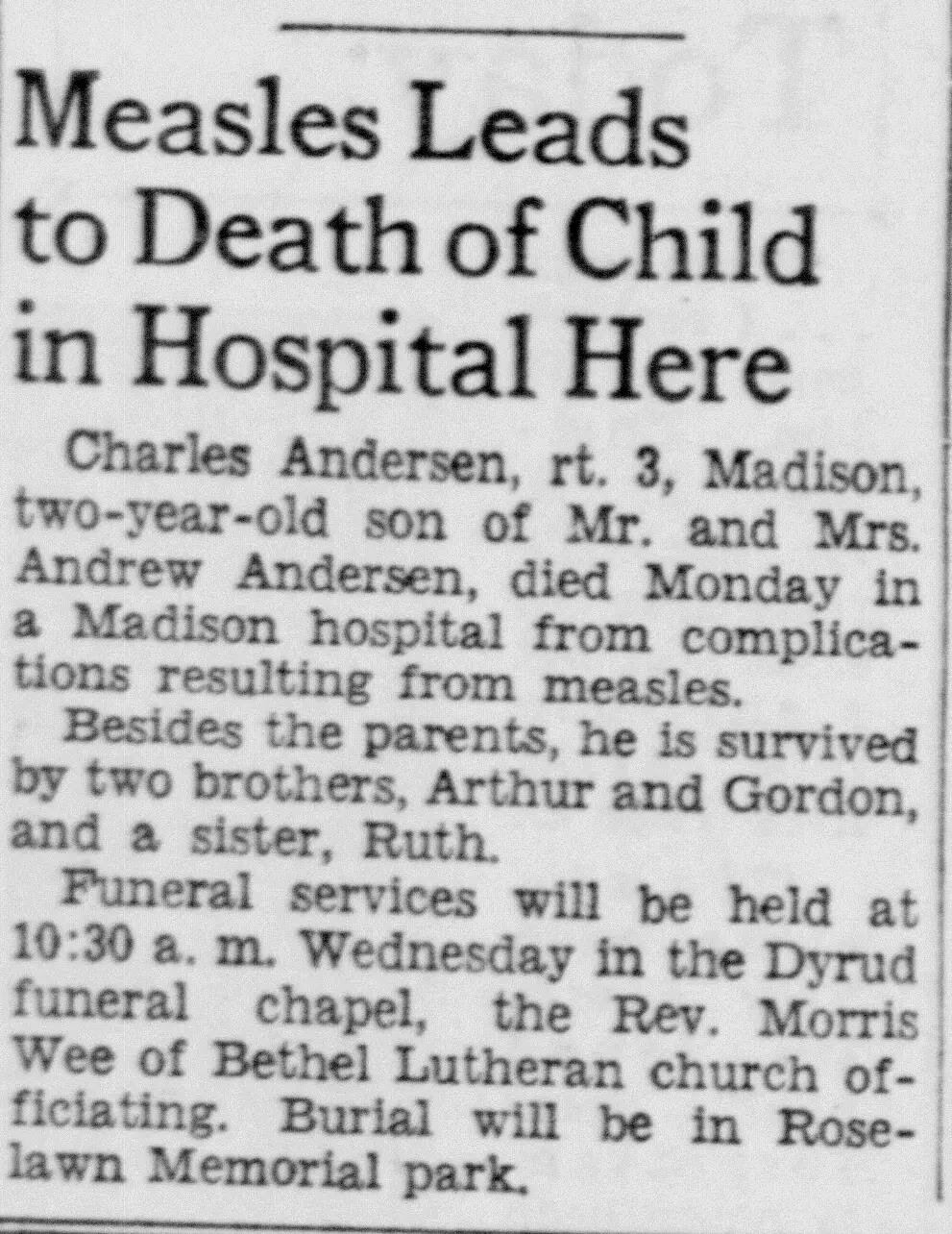
Remembering the toll of infectious diseases
Published on Nov 19 2026
Categories: Pearls
